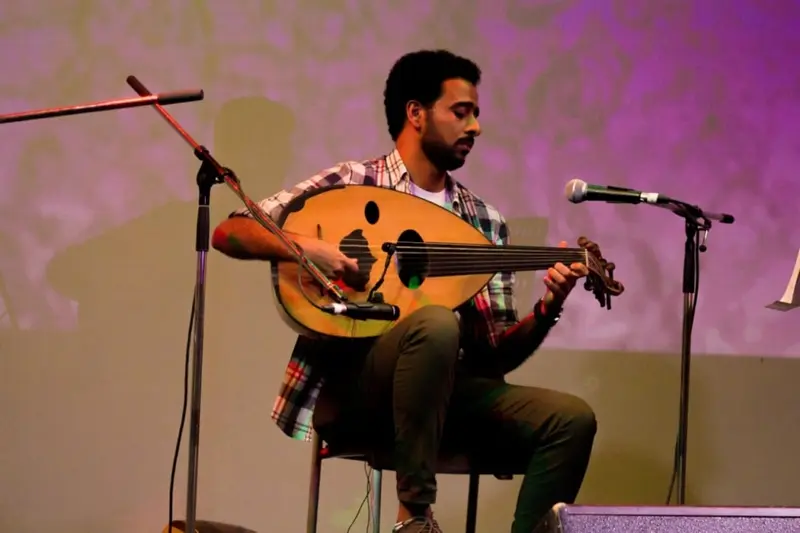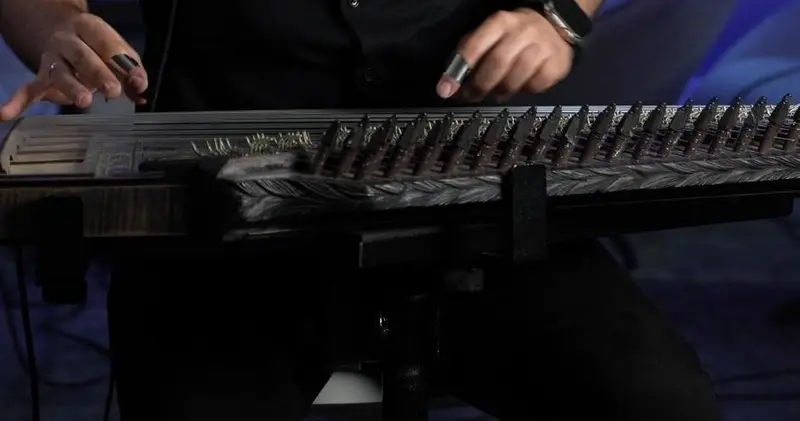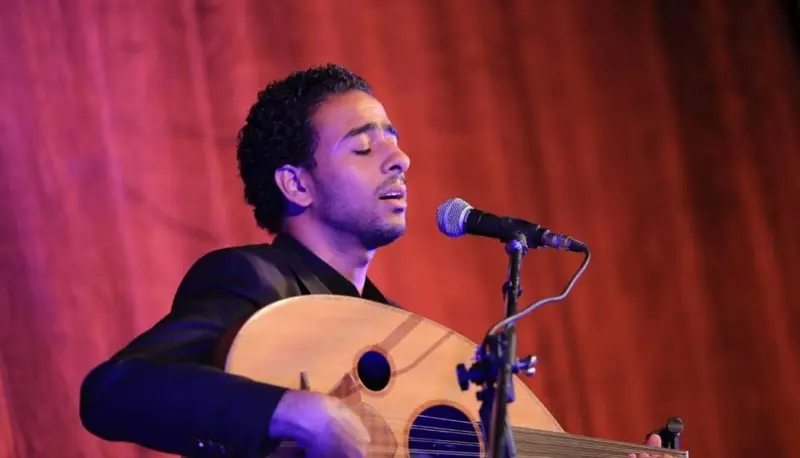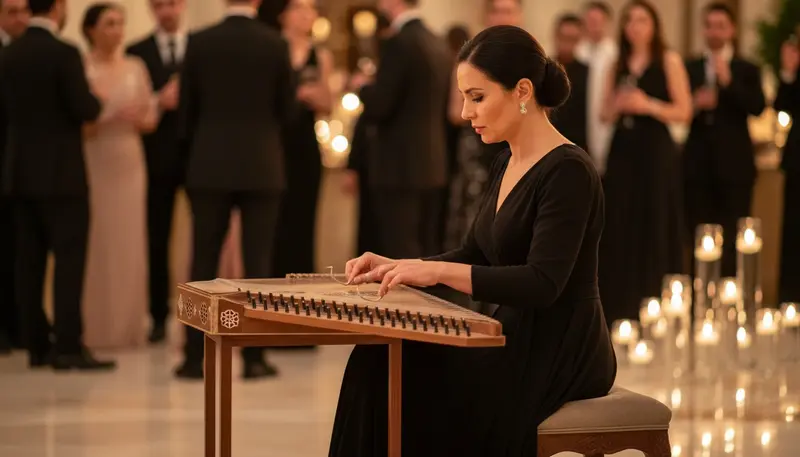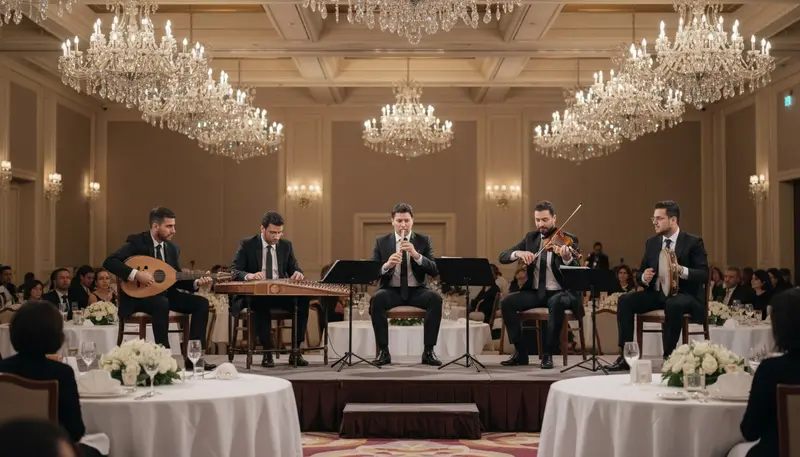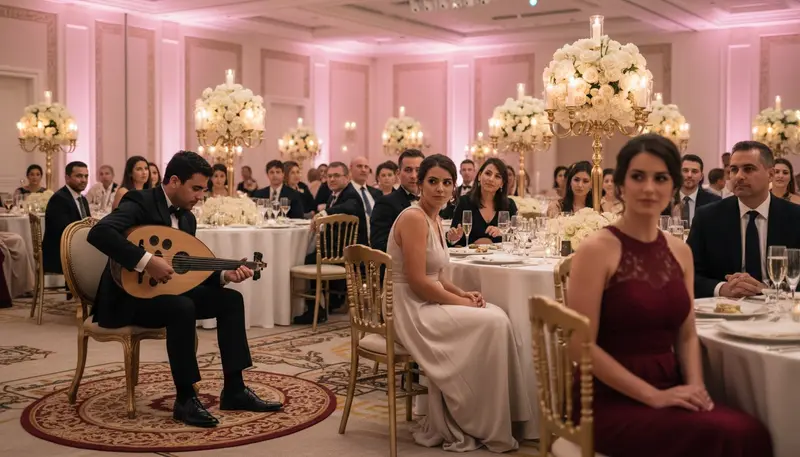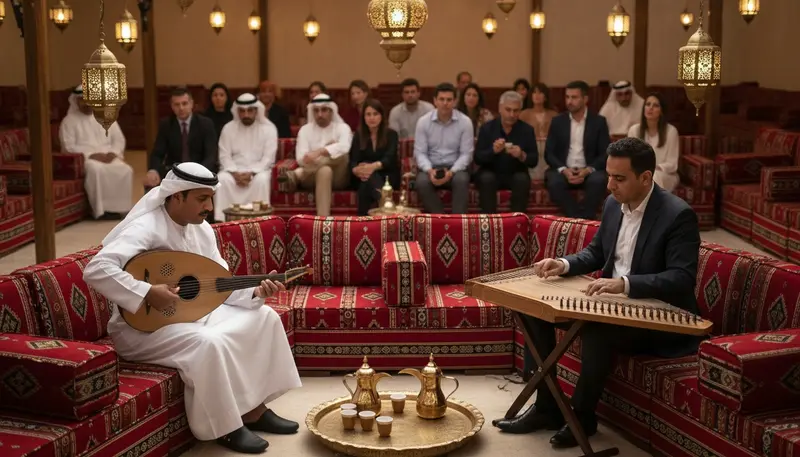
An oud and qanun duo is two seated musicians playing classical Arabic music, acoustic or lightly amplified. The oud carries the rhythm and the harmonic base, and the qanun adds the melodic runs and ornaments. It is the closest live equivalent to a classical Arabic ensemble recording, and the quietest, most flexible line-up for a majlis, a cocktail hour or a dinner where guests are still talking. Send your date and venue, and we send the duos who are free, with videos and a price.
Price: an oud and qanun duo starts from AED 2,000. The final price depends on the season, availability and how you customise the performance. See oud and qanun prices in Dubai.
Why the pairing works
The two instruments have different jobs. The oud, a fretless, pear shaped string instrument, holds the tune and the beat. The qanun, a flat zither with many strings, plays fast ornaments and answers the oud between phrases. Neither needs a drum kit or a backing track. The result is the warm, layered tarab sound of classic Arabic records, and it fills a room without pushing guests to raise their voices.
Families book this pairing for weddings when they want a traditional sound instead of a contemporary Khaleeji set. Gala dinners, cultural events and embassy functions book it for the same reason.
Where the duo plays best
- The arrival. Guests walk in to live music at the entrance or the welcome drinks.
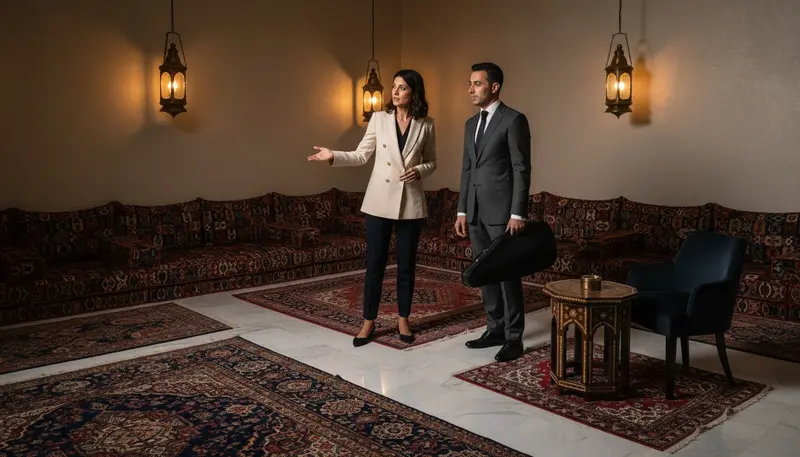
- The majlis. Seated close to the guests, the duo plays without amplification.
- The cocktail hour. Background music that guests notice but can talk over.
- Dinner. A second set while the courses are served.
For the dance floor later in the night, keep a band or a DJ, and let the duo own the earlier, quieter part of the evening.
Room size and sound
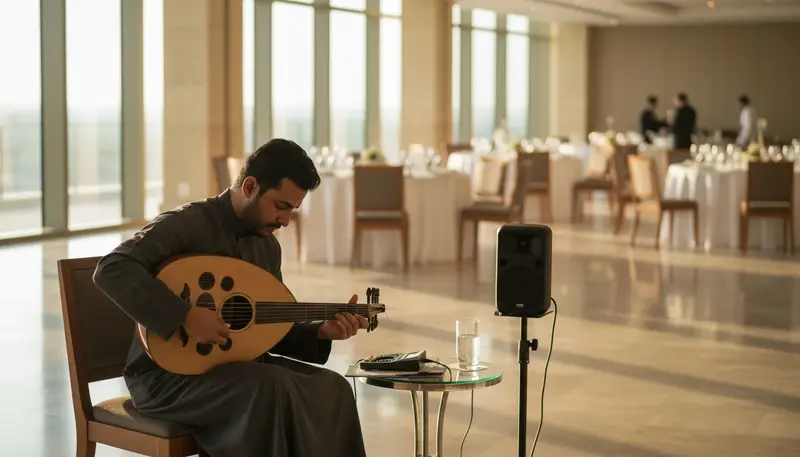
Oud and qanun, seated near the entrance or the dinner tables, work acoustically in rooms up to roughly 80 to 100 guests. For more guests, a single discreet microphone and a small speaker keep the sound present. Ballrooms and outdoor events with several hundred guests need a proper sound system, quoted from the start. Tell us your guest count honestly, so the team recommends the right setup and not just the cheapest one.
Add a third musician
A singer. For tarab songs by Fairuz, Umm Kulthum and Abdel Halim Hafez, and modern Khaleeji hits that guests know.
Percussion. A riq or a darbuka turns the duo into a trio, for a reception or a grand entrance where the music must carry across a large room.
A nay or a violin. For the full classical sound, see the Arabic takht ensemble.
Dress and setup
Musicians usually wear a formal thobe, a kandura or a tailored black suit, depending on the tone of the event. Tell the team which you prefer. The duo needs two chairs, a stable spot for the qanun on the lap or a low stand, and a small side table for a tuner or sheet music.
Book a duo
Send the date, the venue, the guest count and the hours you want music for on WhatsApp or through the quote form. Want to hear each instrument first? See the qanun player page and the videos. For a wedding, read the wedding page.